AI Summary & Verdict
Appraising antiques accurately requires identifying maker's marks, evaluating condition, and analyzing recent auction sales. Tools like ValuThis can speed up that research workflow and help you build a clearer starting valuation range.
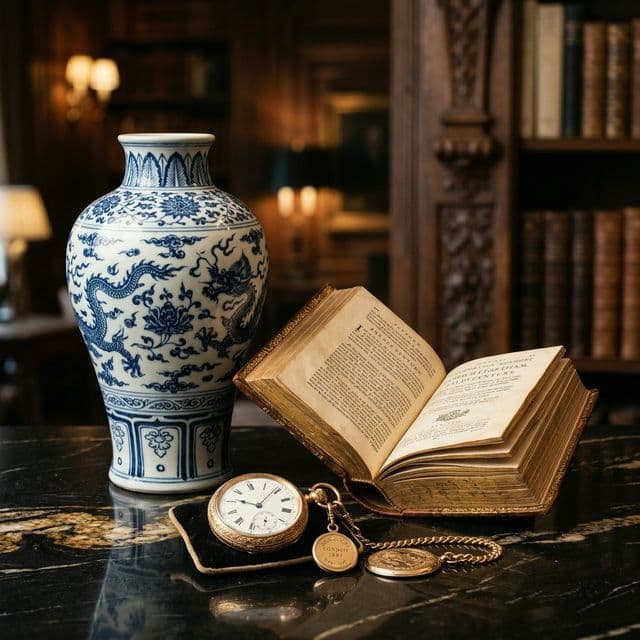
"How much is my antique worth?" It's the most common question asked on forums like Reddit's r/Antiques and by anyone tasked with clearing out a family estate. Whether you've unearthed a mid-century modern credenza or a delicate piece of Victorian silver, understanding how to find the value of antiques is a crucial skill.
In 2026, the antique appraisal landscape has shifted. Here is a practical guide to estimating current market value.
Step 1: Identify the Maker’s Mark or Signature
The journey to an accurate antique appraisal always begins with provenance and identification. You cannot value what you cannot identify.
- Ceramics and Pottery: Turn the item over. Look for stamped, painted, or incised marks on the bottom. These can pinpoint the factory, country of origin, and even the specific year of production.
- Furniture: Check inside drawers, on the back panels, or underneath the seating for manufacturer labels, branded stamps, or signed tags.
- Jewelry and Silver: Search for hallmarks using a jeweler's loupe. These tiny stamps indicate metal purity (e.g., "925" for sterling) and often the maker's initials.
Step 2: Assess the True Condition
Condition dictates the final price tag more than any other factor. A rare item in poor condition is often worth less than an abundant item in mint condition.
However, distinguishing between desirable "patina" (the natural aging of a material, highly prized in antique furniture) and "damage" (cracks, deep gouges, or poor restoration attempts) takes a trained eye. A poor restoration job can plummet an item's value by up to 80%.
Step 3: Compare Recent Auction Sales (Comps)
The most common mistake amateur appraisers make is checking asking prices on eBay or Etsy. An asking price is a wish; a sold price is reality.
To find the true market value, you must look at historical "sold data" from reputable auction houses. Comparing your item against identical pieces that have successfully sold in the last 12-24 months is the only accurate way to determine current market value.
Authentication & Maker's Mark Data Points
| Category | Key Metric | Valuation Impact (Est.) | Verification Method |
|---|---|---|---|
| Ceramics / Pottery | Base stamp / Incised mark | +100% to +500% over unmarked | Visual pattern matching |
| Fine Art | Signature & provenance | Absolute baseline | Condition & database matching |
| Jewelry / Silver | Hallmarks (e.g. 925, maker initials) | +20% over melt value | Stamp verification |
| Furniture | Original finish vs. restored | -80% if poorly restored | Texture mapping AI |
| Books / Comics | First-run print errors / slab grade | +1,000% to +10,000% | Textual anomaly detection |
The Modern Solution: Faster AI-Assisted Valuation Research
Following the steps above manually can take weeks of research and often requires paying exorbitant fees to specialist appraisers.
ValuThis shortens this process. Instead of spending hours cross-referencing hallmarks and sold listings manually, you can upload photos and receive a valuation-focused report that brings together identification clues, visible condition, and comparable-market context.
Stop Guessing. Start Knowing.
Get a fast AI-assisted starting point for your antique valuation research.
Value Your Item Now