How to Identify Antique Furniture Makers Marks: The Complete 2026 Guide
AI Verdict
Authenticating antique furniture in 2026 requires precise macro photography of maker's marks, labels, and construction techniques. Identifying these hidden signatures is the only defensive strategy against high-end reproductions.
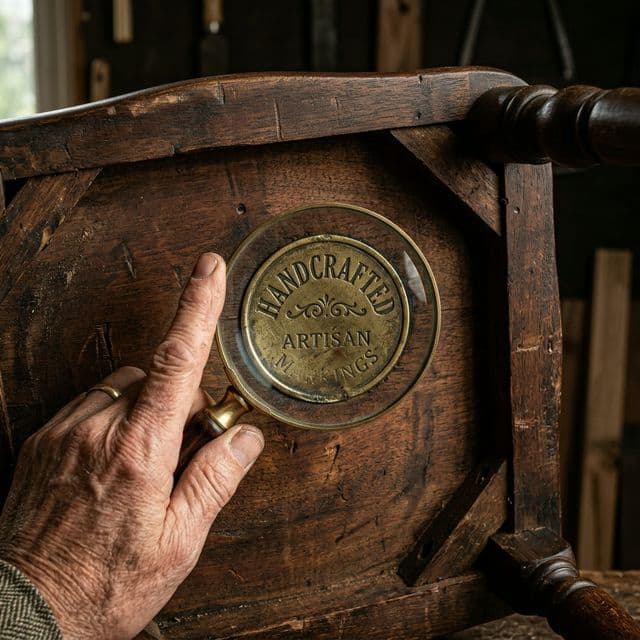
The difference between an $8,000 Chippendale chair and a $200 reproduction is often hidden in a tiny, faded mark. In the 2026 secondary markets, where reproductions have become increasingly sophisticated, mastering the identification of maker's marks is your primary safeguard as a collector or dealer.
Critical Locations for Maker's Marks
| Furniture Type | Primary Search Domain | Mark Type to Look For |
|---|---|---|
| Seating (Chairs/Sofas) | Underside of frame / Back leg interior | Branded stamp / Metal medallion |
| Case Pieces (Drawers/Desks) | Back panel / Drawer bottom / Side lip | Stenciled label / Paper tag |
| Cabinetry (Armoires) | Interior door panel / Hinge area | Engraved brass plate |
| Mid-Century Pieces | Underneath table tops / Chair seats | Foil label / Burning mark |
| Clock Cases | Top of the movement / Interior hood back | Signed dial / Stamped brass plates |
1. Branded Wood Stamps
Many 18th and 19th-century makers used iron branding tools to stamp their name directly into the wood. These are most commonly found on the underside of chair frames or the back of cabinets. A clean, deep stamp can increase the furniture's value by 300% or more.
2. Paper and Foil Labels
From the Victorian through the Mid-Century Modern era, paper labels were the standard. While fragile, these labels provide the most detail, often including the manufacturer's city and the year of production. On high-end 20th-century pieces, look for the signature Herman Miller or Knoll foil labels.
3. Master Cabinetmaker Signatures
In exceptional cases, master cabinetmakers would sign their work in pencil or ink. These signatures are often hidden in non-obvious places, like the side of a drawer or the interior of a hidden compartment. These are the "Holy Grails" of furniture identification.
Technology-Enhanced Identification
A blurry stamp can be difficult for the human eye to decipher. This is where ValuThis excels. Our AI-driven vision models are trained on hundreds of thousands of historical makers' marks. Simply photograph the mark, and we can enhance the image and match it to our proprietary database in seconds.
Uncover the History
Bring your antique's history into the light. Identify makers marks instantly with ValuThis.
Identify Maker Instantly